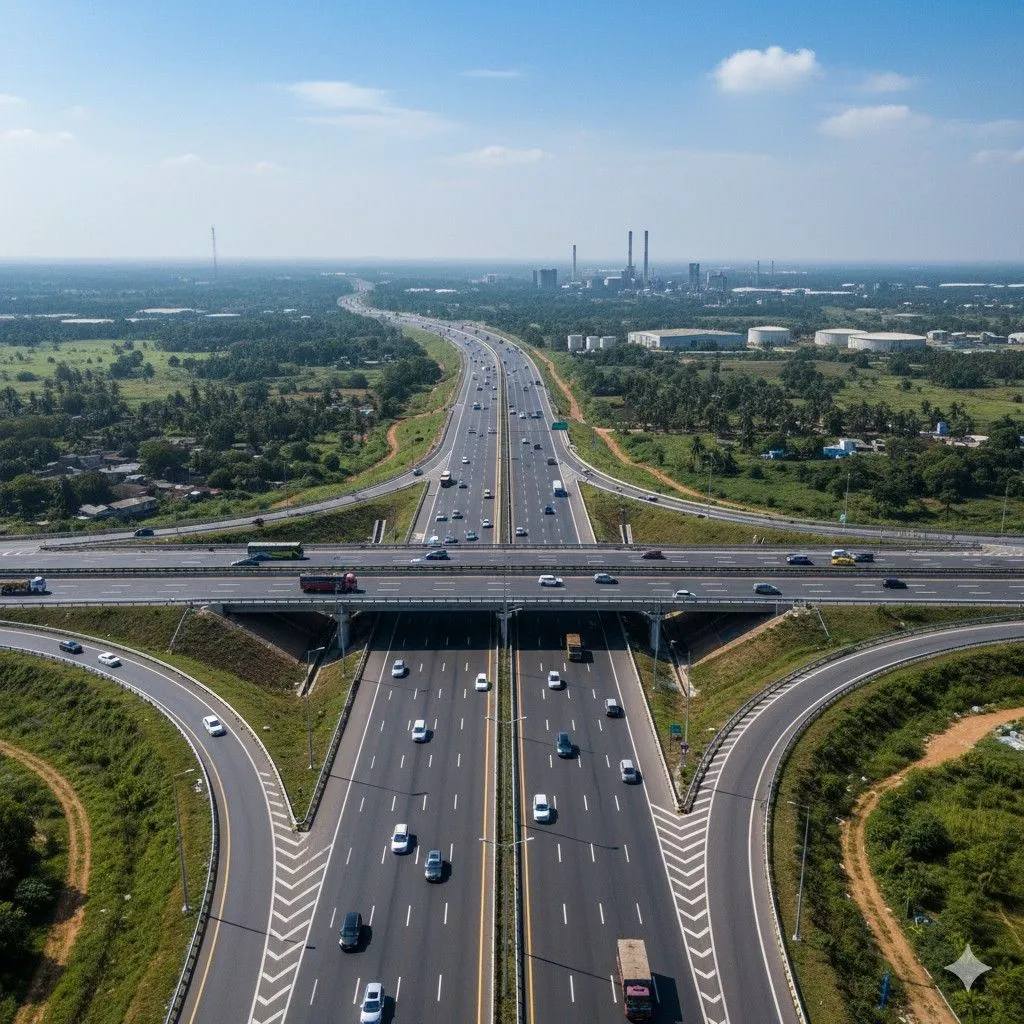
Lucknow: In a major push to integrate infrastructure with economic growth, the Uttar Pradesh government is developing the ambitious Ganga Expressway not just as a high-speed transport route but as a full-fledged Integrated Manufacturing and Logistics Corridor (IMLC). Stretching from Meerut to Prayagraj, the corridor is poised to redefine regional development by connecting district-level strengths with national and global markets.
Planned and executed by the Uttar Pradesh Expressways Industrial Development Authority (UPEIDA), the project features 12 strategically designed IMLC nodes, each focused on specific sectors aligned with local resources and economic potential. The initiative reflects the state government’s emphasis on maximizing regional capabilities while boosting industrialization, employment, and investment.
Meerut: Gateway to Data Economy and Logistics
The expressway begins at Bijoli village in Meerut, seamlessly connecting to the Delhi-Meerut Expressway and ensuring direct access to the National Capital Region. This connectivity is rapidly transforming Meerut into a hub for data centres, warehousing, and sports goods manufacturing. Proximity to Delhi has accelerated growth in logistics and e-commerce sectors, attracting both domestic and global investors.
Hapur: Religious Tourism Meets Agro Processing
In Hapur, the expressway links directly to Garhmukteshwar (Brajghat), boosting religious tourism through improved accessibility. The region, known for potato cultivation and other crops, is witnessing the development of cold storage and food processing units, enabling farmers to access better pricing and wider markets.
Bulandshahr: Emerging Supply Chain Hub
Bulandshahr benefits from its proximity to the upcoming Noida International Airport at Jewar. This strategic advantage is positioning the district as a major supply chain and logistics hub. Industrial clusters and dairy-based industries are expanding, strengthening the rural economy and generating employment.
Amroha: From Craft Heritage to Global Markets
Amroha, known for its traditional dholak-making and wooden handicrafts, is set to gain global exposure. Enhanced connectivity will allow artisans to directly access national and international markets. Additionally, the district’s strong base in mango and sugarcane production is attracting agro-processing industries, creating a dual growth model of craft and food industries.
Sambhal: From Backward Region to Growth Node
Long constrained by limited connectivity, Sambhal is emerging as a new economic centre. Its renowned horn and bone crafts will now reach wider markets through modern logistics networks. The transformation is expected to generate sustainable employment and elevate local artisans to global platforms.
Badaun: Industrial Township Driving Urban Growth
In Badaun, a large industrial township along the expressway is reshaping the district’s economic profile. Improved connectivity is attracting private investment not only in industries but also in education, healthcare, and services, positioning Badaun as a rising urban hub.
Shahjahanpur: Strategic Airstrip and Skill Development
Shahjahanpur is gaining strategic importance with the construction of a 3.5-km airstrip, capable of handling fighter jet landings during emergencies. Alongside this, skill development centres are being set up to train local youth, aligning workforce capabilities with emerging industrial opportunities.

Hardoi: Central Node of the Corridor
With the longest stretch of the expressway passing through it, Hardoi is emerging as a central hub. Proposed knowledge parks and textile parks are expected to attract large-scale investments. Farmers will also benefit as faster connectivity reduces transportation time to major markets like Delhi and Lucknow, increasing profitability.
Unnao: Tri-City Economic Model
Unnao is evolving into a key part of a tri-city economic model with Lucknow and Kanpur. The expressway will significantly benefit Kanpur’s leather industry by enabling faster transportation of finished goods to domestic and international markets, boosting exports and employment.
Raebareli: Expanding Industrial Ecosystem
In Raebareli, the presence of the Rail Coach Factory, Lalganj is catalyzing the growth of ancillary industries. With improved connectivity via the expressway, the district is becoming an attractive destination for investors, leading to rapid expansion in supply chain and manufacturing units.
Pratapgarh: Agro Branding and Market Expansion
Pratapgarh, famous for its amla (Indian gooseberry), is leveraging the expressway to strengthen its agro-based value chain. Food processing units, better packaging, and branding are enhancing export potential. Simultaneously, real estate and commercial activities are expanding around expressway interchanges.
Prayagraj: Confluence of Faith, Law, and Commerce
The expressway culminates at Judapur Dandu village in Prayagraj, significantly improving connectivity for major events like the Kumbh and Magh Mela. Easier access will benefit pilgrims, legal professionals linked to the Allahabad High Court, and students. A proposed large commercial hub is expected to further establish Prayagraj as a centre for trade and services alongside its spiritual significance.
A New Model of Infrastructure-Led Growth
Officials state that the Ganga Expressway represents a shift from traditional infrastructure development to a holistic economic corridor model, where roads serve as catalysts for industrial growth, employment generation, and regional balance.
By aligning district-specific strengths with targeted industrial sectors through 12 IMLC nodes, the Uttar Pradesh government aims to ensure inclusive, sustainable, and large-scale economic transformation across the state.
The Ganga Expressway is emerging as more than just a connectivity project—it is a blueprint for integrated regional development. By linking local economies with national supply chains and global markets, the corridor is set to redefine Uttar Pradesh’s growth trajectory and position it as a key driver of India’s economic expansion.